⏱ 12 min read
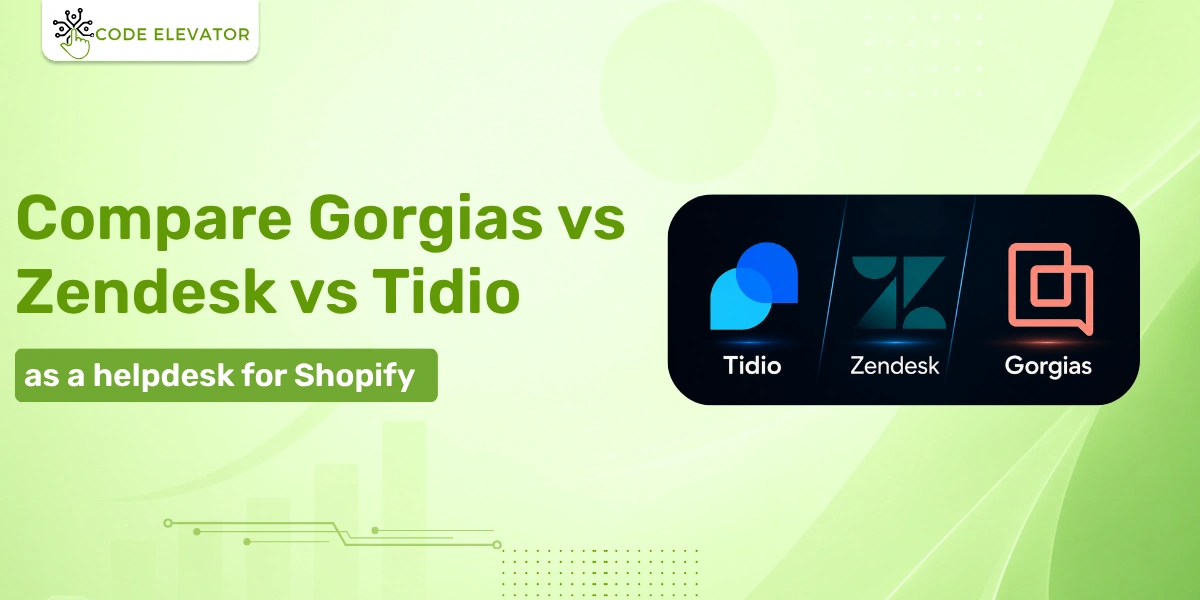
If you are searching Gorgias vs Zendesk vs Tidio Shopify, you are already past the “shared Gmail inbox” stage. The real problem is not finding a tool with the longest feature list. It is choosing one that fits your current ticket volume, your channel mix, and the next 18–24 months of growth without forcing a painful migration too soon.
For most Shopify brands between $500k and $10M GMV, the wrong helpdesk does not just create admin friction. It adds real labour cost, slows replies, hides support bottlenecks, and hurts conversion during launches or paid traffic spikes. A low-cost tool can become the expensive option once agents start switching tabs for every refund, cancellation, or address update.
This guide cuts through the usual feature-grid fluff. We will look at Gorgias vs Zendesk vs Tidio Shopify through the tests that actually matter: monthly ticket volume, support channels, Shopify depth, automation quality, reporting, and when to switch before the migration gets ugly. Start with the first test: your operational shape today.
Gorgias vs Zendesk vs Tidio Shopify: how to choose by ticket volume, channel mix, and team size
The fastest way to choose between these three tools is to ignore vendor positioning and map your support operation. In Gorgias vs Zendesk vs Tidio Shopify, the right answer changes once ticket count, channel mix, and team structure shift.
A 2-agent store handling 400 mostly presale chat conversations does not need the same platform as a 9-agent support team covering email, Instagram DMs, WhatsApp, and returns across two regions. One tool will feel light and fast. Another will feel bloated. Another will feel cheap until it starts wasting hours.
Use this as the first-pass fit check before you get pulled into demos and pricing calculators.
| Tool | Best-fit GMV stage | Monthly ticket volume | Strongest channels | Shopify depth | Setup time | Ideal team size | Biggest limitation |
|---|---|---|---|---|---|---|---|
| Tidio | $500k–$1.5M | 200–800 | Live chat, basic email, simple social chat | Basic plugin-level context, limited order actions | 1–2 hours | 1–3 agents | Starts slowing teams once post-purchase tickets rise |
| Gorgias | $1M–$10M | 800–5,000 | Email, live chat, Instagram/Facebook DMs, WhatsApp | Deep Shopify order context and actions | 1–2 hours | 3–10 agents | Less flexible for enterprise routing and advanced reporting |
| Zendesk | $5M+ or complex multi-brand ops | 5,000+ | Email, voice, chat, multi-brand routing, SLA-driven support | Good with setup, but less native day-to-day Shopify flow | 1–3 weeks | 8+ agents or multi-region teams | Overhead, admin load, and slower setup |
That table gives the short version. The longer version is this: Tidio works when support is still simple, Gorgias is the default answer for most growing Shopify brands, and Zendesk only starts making sense when your support operation becomes structurally complex rather than merely busy.
Gorgias vs Zendesk vs Tidio Shopify by monthly ticket volume
At under 800 tickets a month, Tidio is usually enough. If most conversations are basic chat questions, delivery times, and simple email support, its lower entry cost is hard to argue with. The problem starts when those tickets become more order-related. A support agent answering 20 “where is my order?” tickets a day can survive on Tidio. An agent processing cancellations, refunds, and address edits all day will feel the limits fast.
At 800–5,000 tickets a month, Gorgias becomes the strongest default in Gorgias vs Zendesk vs Tidio Shopify. This is the band where Shopify-native workflows matter most. If you can view order context, pull customer history, and take action without bouncing between tabs, you save time on almost every ticket. Across a 4-agent team, that can mean tens of hours a month.
At 5,000+ tickets a month, the decision changes again. If the operation is still one brand, mostly Shopify, and heavy on post-purchase support, Gorgias can still hold up. But if you add multiple brands, regional teams, languages, formal SLAs, or voice support, Zendesk starts to justify its heavier setup and admin overhead.
A simple rule:
- Under 800 tickets: start with Tidio if budget is tight.
- Between 800 and 5,000: default to Gorgias.
- Above 5,000 with complexity: test whether Zendesk is now necessary.
Gorgias vs Zendesk vs Tidio Shopify by channel mix and support complexity
Channel mix is the second major filter in Gorgias vs Zendesk vs Tidio Shopify. Many comparisons skip this and treat “omnichannel” as a yes-or-no feature. That is lazy. The useful question is which channels dominate your workload.
If your team is email-heavy, all three can work. But once those emails are mostly post-purchase and tied to order changes, Gorgias pulls ahead because the Shopify context is already where the agent is working. Zendesk can do it, but often with more setup and less native flow. Tidio can cover the basics, but agents will spend more time in Shopify admin.
If your brand is live chat-first, Tidio is stronger than many teams expect. This is why it wins early-stage stores. It is fast to set up and easy for lean teams. But if that chat volume shifts from presale questions to returns, delayed shipments, and loyalty account issues, its simplicity starts becoming drag.
If your team handles a lot of Instagram and Facebook DMs, Gorgias is usually the better fit for Shopify brands. Social support only works when the agent can turn a DM into a resolved order issue quickly. If your support lead is also watching WhatsApp, Gorgias stays competitive, while Zendesk becomes more compelling only if WhatsApp is part of a wider enterprise routing setup.
If you need voice, multi-brand routing, strict SLA management, or regional queues, Zendesk wins. That is where the platform earns its complexity. If you do not need those things in the next 18 months, you are probably paying for overhead you will resent.
Gorgias vs Zendesk vs Tidio Shopify pricing: what it really costs at 200, 1,000, and 5,000 tickets
Most pricing pages are misleading because they push you toward sticker price. In Gorgias vs Zendesk vs Tidio Shopify, the useful metric is not monthly subscription cost alone. It is platform cost plus agent time plus the cost of slower handling.
A cheap tool that forces every agent to spend an extra 30 seconds to 2 minutes per ticket becomes expensive very quickly. At 1,500 tickets a month, even small workflow drag adds up. Before choosing, model your likely cost per ticket and manual workload. Also, verify current pricing on each vendor site, because plans and limits change often.
| Monthly ticket volume | Team size | Tidio estimated cost | Gorgias estimated cost | Zendesk estimated cost | Likely add-ons | Estimated manual workload | Cost-per-ticket direction |
|---|---|---|---|---|---|---|---|
| 200 | 1–2 agents | $0–$99/month | $10–$150/month | $165–$300/month | Chatbot, social inbox, AI extras | Low | Tidio lowest |
| 1,000 | 3 agents | $79–$299/month | $300–$800/month | $165–$600/month | AI, advanced reporting, messaging, integrations | Medium on Tidio, lower on Gorgias | Gorgias often wins in practice |
| 5,000 | 6–10 agents | $300–$900+/month | $1,000–$2,500+/month | $600–$2,500+/month | Voice, analytics, admin controls, routing | High on Tidio, medium on Gorgias, lower at scale on Zendesk | Zendesk or Gorgias depending on complexity |
The point is not that one platform is always cheaper. It is that price behaves differently at each stage. At low volume, subscription cost dominates. At higher volume, workflow efficiency dominates.
Gorgias vs Zendesk pricing for Shopify store teams
In Gorgias vs Zendesk vs Tidio Shopify, the Gorgias vs Zendesk pricing question comes up once brands are already beyond the smallest stage. Gorgias pricing usually makes more sense for a Shopify-first support team because the Shopify workflows are built into the daily experience. A 4-agent team handling 2,000 order-related tickets a month may pay more than an entry-level chat tool, but save enough time to avoid a part-time hire.
Zendesk pricing works differently. The listed per-seat number can look manageable, especially for a 3-agent team. But Zendesk’s real cost often appears in configuration, admin ownership, training time, and add-ons. If you need voice, advanced analytics, or complex routing, that overhead is fair. If you do not, it is friction.
A real scenario: a 7-figure Shopify beauty brand with 3 agents and roughly 1,200 monthly tickets trialled a general enterprise helpdesk after outgrowing inbox support. They found reporting strong, but agents still jumped between the helpdesk and Shopify for order actions. Average handling time stayed high. Moving to a more Shopify-native setup cut handling time by around 20%, which outweighed the difference in sticker price.
Cheapest helpdesk for Shopify vs lowest cost per ticket
The cheapest helpdesk for Shopify is not always the one with the lowest monthly fee. This is the biggest mistake buyers make in Gorgias vs Zendesk vs Tidio Shopify.
Tidio often looks cheapest up front. For low-volume teams, that is true. But once your tickets become more operational, not just conversational, the manual work goes up. If an agent must open Shopify admin for every order edit, refund check, or cancellation request, the software is no longer cheap. It is just underpriced software sitting inside an expensive workflow.
Gorgias often lands in the sweet spot because it reduces handling time on the tickets DTC brands get most: WISMO, returns, address changes, cancellation requests, and subscription questions. Shopify’s own ecosystem increasingly rewards fast, integrated workflows, and the Shopify Partners Blog regularly highlights operational efficiency as a scaling factor.
Zendesk can have the lowest cost per ticket at scale, but only when complexity is high enough to justify its routing, reporting, and admin depth. A 3-agent team is rarely there. A multi-brand support function with regional queues often is.
Gorgias vs Zendesk vs Tidio Shopify features that change daily support performance
Daily support performance is shaped by boring things: how many tabs agents open, how quickly they see order context, whether macros are easy to maintain, and whether reporting tells you what is breaking. That is where Gorgias vs Zendesk vs Tidio Shopify becomes practical.
Feature checklists are not enough. The better lens is daily operational drag.
| Feature area | Gorgias | Zendesk | Tidio | Shopify order actions | Social DM handling | Automation depth | Reporting depth | Agent training time |
|---|---|---|---|---|---|---|---|---|
| Core Shopify support flow | Strong | Moderate | Basic | Deep in-ticket actions | Strong | Strong ecommerce-specific | Moderate | Low to medium |
| Enterprise support control | Moderate | Strong | Basic | Possible with setup | Strong | Strong with configuration | Strong | Medium to high |
| Live chat-first support | Good | Good | Strong | Limited direct actions | Good | Moderate | Basic to moderate | Low |
| Multi-brand operations | Moderate | Strong | Weak | Requires planning | Strong | Strong | Strong | High on Zendesk |
| Small team ease of use | Strong | Moderate | Strong | Fast | Fast | Easy to launch | Limited depth | Low |
The day-to-day difference is simple. Gorgias is designed around Shopify support work. Zendesk is designed around broad support operations. Tidio is designed around fast chat adoption with lighter helpdesk needs.
Best Shopify helpdesk for Instagram DMs, chat, and order-related tickets
If a large share of your tickets come from Instagram DMs, live chat, and order-related support, Gorgias is usually the best answer in Gorgias vs Zendesk vs Tidio Shopify. That is because it combines social support with Shopify order context in a way that matches DTC reality.
This matters most for brands where support mixes sales and service. A customer messages on Instagram asking about sizing, buys, then comes back three days later asking to change their shipping address. The best workflow is one where the same support environment can handle both stages cleanly.
Tidio is good for chat-heavy teams, especially where presale support drives conversion. If you mostly answer product questions, shipping times, and basic cart help, it does the job. But when the mix shifts to cancellations, refunds, and post-purchase issues, Gorgias becomes the better operational tool.
Zendesk is not the best Shopify Instagram DM tool for most mid-market brands. It is the best broader support operations tool when social DMs sit inside a much larger service model that also includes voice, SLAs, formal escalation paths, and multiple teams.
Gorgias vs Zendesk vs Tidio Shopify automation and reporting
Automation percentages are often quoted without context. In Gorgias vs Zendesk vs Tidio Shopify, reported ranges commonly put Tidio around 40–50%, Gorgias around 50–65%, and Zendesk around 45–60%, depending on setup. The more useful question is what kinds of tickets those automations can actually resolve.
If a big share of your queue is shipping status, return policy, subscription changes, and simple order edits, Gorgias automation tends to create the biggest staffing impact because those workflows are closer to Shopify operations. A team handling 2,000 monthly tickets might cut human-handled volume by hundreds of tickets if the order data is usable inside the helpdesk.
Tidio automation is good at chat qualification, FAQ deflection, and lead capture. It gets weaker when the issue requires transactional order context. That is the ceiling many growing stores hit.
Zendesk automation can be powerful, but the value depends on setup discipline. If your team lacks an internal admin owner, you may pay for capability you never fully configure. For support leaders who need benchmarking and better UX research, Baymard Institute is useful for identifying where support friction often begins before a ticket is ever created.
When to switch: Tidio to Gorgias, or Gorgias to Zendesk for Shopify
Most teams switch too late. That is the hidden lesson in Gorgias vs Zendesk vs Tidio Shopify. They wait until queues are messy, macros are inconsistent, and training new agents is painful. By then, migration costs more and support quality drops during the transition.
The trigger is rarely “we hit an exact ticket number.” It is usually a mix of signs:
- agents switching tabs constantly
- response times slipping
- no clean reporting by channel
- social DMs getting missed
- no confidence in automation
- support lead unable to justify staffing needs
An anonymised example: a fast-growing apparel brand stayed on a light chat-led tool until monthly volume crossed roughly 1,600 tickets. Their agent team still used Shopify admin for many order actions. Average handling time drifted upward, and launch days produced long delays in Instagram DMs. After moving to a more Shopify-native helpdesk, first response time on order-related tickets dropped by roughly 25%, and the team delayed an extra hire for one quarter.
How to migrate from Tidio to Gorgias without support downtime
If you are moving from Tidio to Gorgias, do it before volume gets too high. The cleanest migration point is usually between 800 and 1,500 monthly tickets. Past that, the number of live workflows, tags, and channel dependencies makes the project messier.
Use this migration sequence:
- Export and document your top ticket categories.
- Rebuild your top 10 macros first.
- Connect Shopify, returns, loyalty, and subscription apps before switching channels.
- Route one lower-risk channel first, such as chat or email.
- Run both systems in parallel for 7–14 days.
- Train agents on order actions, tagging, and escalation rules.
- Audit missed tickets daily during cutover.
What needs to be rebuilt:
- macros and canned replies
- chatbot flows
- tags and ticket fields
- assignment rules
- reporting views
- knowledge base links
If you also need store-side workflow help, this is often where Shopify app integration and wider eCommerce marketing services start overlapping with support operations.
When Zendesk is worth it for a Shopify brand
Zendesk is worth it when support becomes operationally complex enough that structure matters more than native Shopify speed. In Gorgias vs Zendesk vs Tidio Shopify, this is the line most teams misread.
Zendesk becomes necessary when you have several of these at once:
- 5,000+ tickets a month
- multiple brands or storefronts
- multiple regions or languages
- formal SLA targets
- voice support
- layered permissions and admin controls
- deeper reporting by queue, team, or market
- dedicated support operations ownership
If you are a single-brand Shopify store with 3–6 agents, Zendesk is usually overkill. If you run a multi-region support function and need to manage routing by language, product line, and priority tier, Zendesk stops being overkill and starts being infrastructure.
If you are also expanding across markets, support tooling should be planned alongside Shopify international setup rather than after the fact.
FAQ: Gorgias vs Zendesk vs Tidio Shopify
Is Tidio good enough for 500 tickets a month?
Yes, usually. At 500 tickets a month, Tidio can work well if most conversations are presale chat, simple email, and light post-purchase support. If a big share of those tickets requires refunds, cancellations, or order edits, you may outgrow it faster than expected.
Gorgias vs Zendesk pricing: which is cheaper for a Shopify team?
For most small to mid-sized Shopify teams, Gorgias is usually the better-value option even when Zendesk’s seat pricing looks competitive. Zendesk often becomes more expensive once setup time, admin ownership, and add-ons are included. Verify current pricing on both vendor sites before deciding.
How many tickets per month before I need Gorgias instead of Tidio?
The practical switch point is usually around 800 to 1,500 monthly tickets. If ticket complexity is low, Tidio can stretch further. If post-purchase volume is high, Gorgias often becomes worth it earlier.
Can you use Zendesk for multiple Shopify stores?
Yes. Zendesk is often the stronger option when you need to support multiple Shopify stores, brands, or regions with separate routing and reporting. That is one of the clearest cases where its extra setup overhead makes sense.
Which helpdesk is best for Shopify Instagram DMs and post-purchase support?
For most Shopify brands, Gorgias is the best balance of Instagram DM handling and post-purchase support efficiency. It is usually the strongest fit when social conversations turn into order-related tickets. Zendesk is stronger for larger multi-team operations, while Tidio is better for lighter chat-led workflows.
What is the best helpdesk app for Shopify for a 3 to 10 agent team?
For most 3 to 10 agent Shopify teams, Gorgias is the safest recommendation. It scales better than Tidio for order-heavy support and is less burdensome than Zendesk for a typical DTC operation. If you expect enterprise routing or voice support soon, then Zendesk deserves a serious look.
Choosing Gorgias vs Zendesk vs Tidio Shopify should be a decision about operational fit, not vendor branding. Tidio is fine when volume is low and support is still mostly chat. Gorgias is the strongest default for most Shopify brands in the messy middle, where ticket volume, social DMs, and order-related support all start to climb. Zendesk only earns its keep when complexity becomes structural: multiple brands, regions, SLAs, voice, and deeper reporting needs.
If you want a clear recommendation based on your ticket volume, channels, and current app stack, book a tech stack consultation. We can map your likely cost per ticket, migration risk, and the fastest path to a support setup that fits the next 18–24 months, not just next week.
Get a free consultation today!
Book a free demo with Code Elevator IT Solutions.
Call Now: +971 555714507